D2R Mobile Greater Rift Guide: 100 Levels, Rewards & Strategy
Quick Answer
- Entry
- Red portal in Harrogath, after completing Hell. The port's flagship endgame mode.
- Core loop
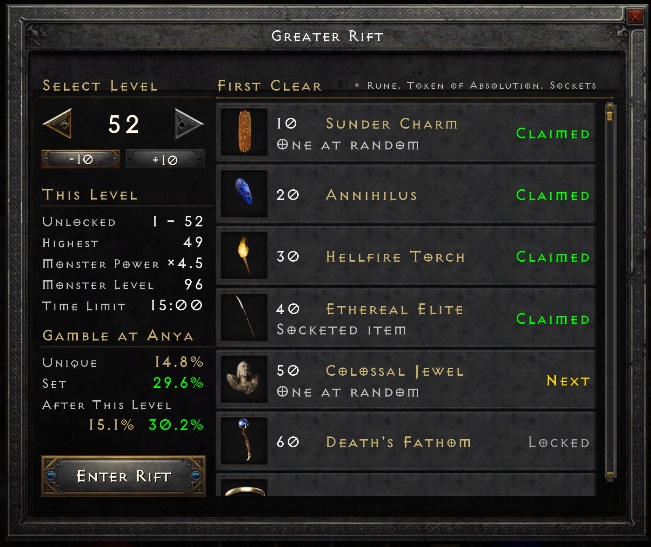
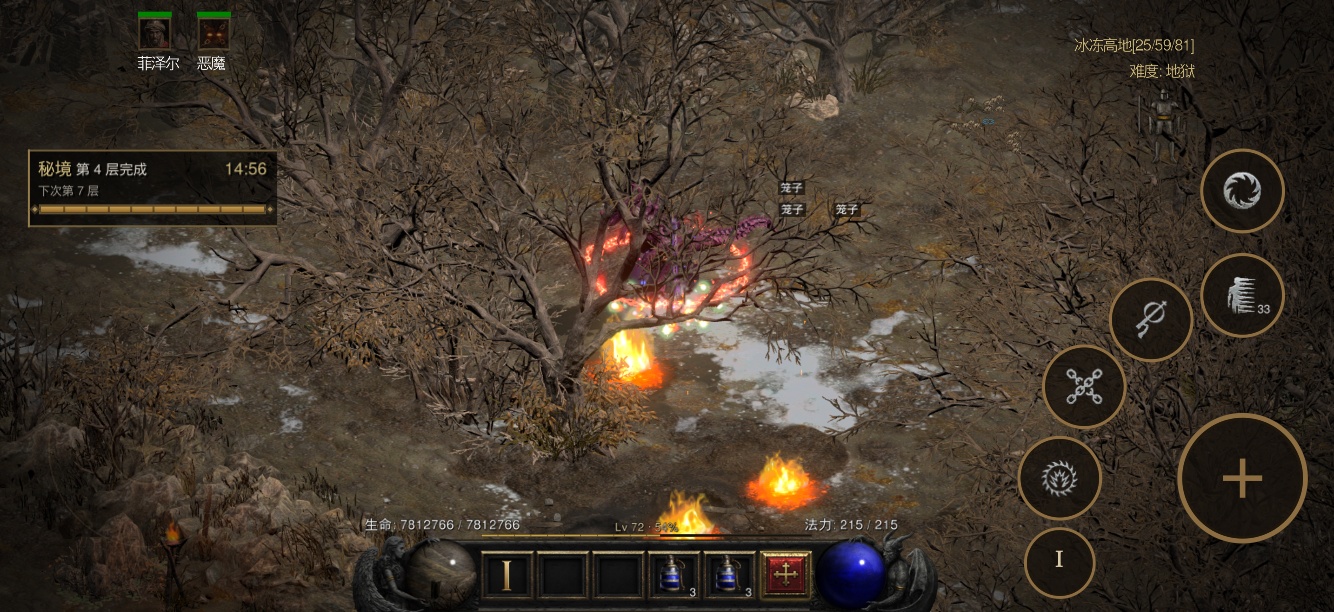
- 100 levels; monsters grow stronger each level. Fill the progress bar and slay the Rift Guardian within 15 minutes to clear.
- Why it changes builds
- Every 2 levels cleared = +1 Skill Point and +5 Stat Points, and the skill level cap rises from 20 to 40.
What the Greater Rift Is
Finish Hell difficulty and a red portal appears in Harrogath. Beyond it is the Greater Rift — the d2r-mobile project's flagship endgame addition: one hundred levels, each harder than the last, each a race against a fifteen-minute clock. Nothing about the original game's rules changes; this is a new layer built on top of them.
The Reward Math
The rules below are the project's own, from its public documentation (accessed 2026-10-15):
| Rule | Effect |
|---|---|
| Every 2 levels cleared | +1 Skill Point and +5 Stat Points |
| Skill level cap | Rises from 20 to 40 |
| Every 10 levels | A first-clear reward |
| Clearing level 10 | Unlocks six new equipment slots for your mercenary |
| Per-level timer | Fill the progress bar and slay the Rift Guardian within 15 minutes |
Read that table twice — the fourth line is the one that changes everything. In the original game a mercenary is a support act; with six equipment slots and the Rift's stat inflation, a well-geared mercenary becomes a second character.
Strategy: How Deep Can You Go?
Three consequences follow from the reward math:
- Skill-point-rich builds come alive. The original game punishes spreading points — 20-point caps make hybrid builds thin. With a cap of 40 and skill points flowing every two levels, hybrids and one-point-wonder skills suddenly have room to breathe. If your build always felt "three points short" in the original, this is the mode that fixes it.
- Mercenary gear is no longer optional. Six slots on a body that scales with Rift levels means investing in your merc is investing in yourself. Treat the level-10 unlock as a hard milestone: clear it early, gear the merc properly, then push deeper.
- Stats matter more than magic-find. The Rift's rewards are fixed per clear (+1/+5 every two levels), not drop-based — so attribute efficiency and clear speed beat MF gear here. Do your MF farming in Elysium mode (separate guide), then come back to the Rift with a speed-cleared, hard-hitting setup.
Timer reality check: fifteen minutes per level is generous on early levels and tight as monsters scale. If you are consistently clearing with ten minutes to spare, jump levels — the panel lets you pick your level, and skipping ahead is how the reward math accelerates.
Greater Rift FAQ
Do I need to beat Hell on every character?
The portal opens after completing Hell — it is per-character progression, same as any difficulty gate in the original game.
What happens if the 15-minute timer runs out?
The level is not cleared and you try again — the project documents the 15-minute clear condition, not a punishment mechanic. Think of it as the bar you must beat, not a bomb.
Does the Rift exist in the PC/console game?
No — Greater Rift, like Elysium and Boss Rush, is exclusive to the d2r-mobile port. That is why no other guide site covers its build logic.
Mode rules from the d2r-mobile project README (accessed 2026-10-15). Strategy sections marked as editorial judgment are our reasoning, not the project's claims.